
“For when one says, I am of Paul, and another, I of Apollos, are ye not men?”
1 Corinthians 3:4
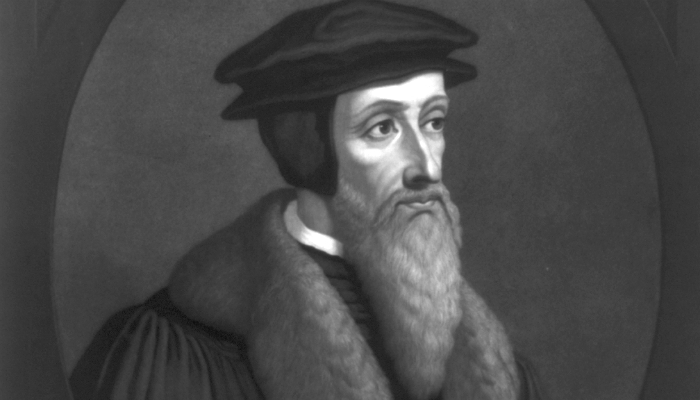
Calvinism is a theological system named after John Calvin. One of the most best known beliefs of Calvinism is the doctrine of God’s sovereignty in the salvation of sinners. Calvinism also emphasizes the doctrine of predestination. The Calvinist view teaches that God has already pre-determined who will go to Heaven and who will go to Hell. The key points of Calvinism make up the acronym TULIP. I aim to explain what TULIP is and what it means. Calvinism is a broad term, and it is more than TULIP. In this paper, I aim to explain what TULIP means and to ask whether these points are scriptural. Before I go into the main body of this article, I would like to make a personal comment. I was once a hardline Calvinist. I defended Calvinism and regarded Calvinism as a hill to die on. I once held the position that if someone was not a Calvinist then they were likely not saved or very badly taught. I once proudly wore a t-shirt voicing my strong support for Calvinism. The words, “I was predestined to be a Calvinist” were boldly printed on the front. I once wrote a book defending Calvinism, a book that is no longer in print and has been removed from public sales.
You will hear many Calvinists say of non-Calvinists that they are Arminian. By this, they view that the will of man is central to salvation and not the will of God. The truth is it is not an either-or argument. You are not either a Calvinist or an Arminian. You don’t have to be one or the other. You can be a faithful follower of the Lord without fully accepting either one.
Now let us look at the core beliefs of Calvinism which are summed up in the five points of TULIP.
Total Depravity
The concept of total depravity teaches that sinners are completely unable and unwilling to accept the truth of the Gospel without God drawing them. This view is taken from John 6:44, “No one can come to me except the Father who has sent me draw him, and I will raise him up in the last day.” Based on this passage it is understandable how someone can accept the doctrine of total depravity. Jesus makes it clear that we cannot come to him without being drawn. Some Calvinists will use John 6:44 as a proof text for the first point of TULIP. However, it does not hold water because Jesus said he would draw all men unto him, not some, not a few, but all. Christ will draw all men unto him, but not all of them will trust in Him as Saviour. God draws all people to Himself by the preaching of the Gospel.
In John 12:32 the Bible says, “And I, if I be lifted up from the earth, will draw all men unto me.” It is the cross of Christ that draws all men to him. Christ has drawn all men to him, but the sinner must make the choice to follow him or to reject him. Romans 10:17 says, “So then faith comes by hearing, and hearing by the word of God.” One of the essential elements of salvation is faith. Without faith, it is impossible to please God. Those who come to God must seek him and believe with faith (Hebrews 11:6). Putting your faith in Christ is a choice.
God does give us a choice to follow him or not. Just look at the Old Testament, the children of Israel had a choice to follow and obey God. For example, in Deut. 30:19 God calls on the people to, “choose life, that both thou and thy seed may live.” Another example is the Garden of Eden. Adam and Eve had the choice to eat or not to eat the forbidden fruit. The devil had to tempt Eve to disobey. She was not ordained to sin, nor was her sin in the plan of God for her.
In James 1:5 the Bible says, “If any of you lack wisdom, let him ask of God, that giveth to all men liberally, and upbraideth not; and it shall be given him.” Notice how the Scripture says that God gives to all men who ask for wisdom. Titus 2:11 says, “For the grace of God that bringeth salvation hath appeared to all men.”
There is clearly a choice to be made. The choice is to serve and follow or to disobey and reject. In the words of Joshua 24:15, “…choose this day who ye will serve.” God of course has foreknowledge of who will repent and believe the Gospel because He is all-knowing. That does not mean to say that God has made the choice for you. The choice is ours to make. We are not robots. We are moral beings with a choice to make.
If the choice to believe has already been made for us by God, then why are we told to go into all the world and share the Gospel. The Great Commission would seem a pointless task if God has already pre-approved people for Heaven or Hell.
Calvin taught that a lost sinner cannot come to Jesus Christ unless he is foreordained to come to Christ and unless God overpowers the sinner and gives him the ability to come, he never will. I believe that mankind is totally depraved in the sense that there is nothing good in man to earn or merit salvation. The Bible says that the heart of man is very wicked above all things (Jeremiah 17:9). The Bible does teach the wickedness of the heart of man, but it does not teach the total inability of man. Jesus said, “Ye will not come to me, that ye might have life” in John 5:40. It is not a matter of whether you can or cannot come, it is a matter that you will not come. It is the will of the sinner that prevents salvation.
Unconditional Election
The second point of TULIP is unconditional election. This is the view that God has chosen people for salvation not based on any merit, effort or will of the sinners. This doctrine has led to some Christians being very lazy about Gospel ministry. If God alone makes the decision of redemption, then evangelism is pointless. Men and women don’t need to hear the Gospel being preached if God has already made the choice for them.
Election from a Calvinist position is that God has elected people for salvation and some for damnation. John Calvin wrote, “God not only foresaw the fall of the first man and in him the ruin of his posterity; but also at his own pleasure arranged it” (Institutes of the Christian Religion Book III, Chapter 23, Paragraph 7). Calvin also wrote in the Institutes of the Christian Religion, “We say, then, that Scripture clearly proves much, that God by his eternal and immutable counsel determined once for all those who it was his pleasure one day to admit to salvation and those whom, on the other hand, it was his pleasure to doom to destruction.” The only thing clear here is that John Calvin never read Ezekiel 18:23 and 33:11. Ezekiel 18:23 says, “Have I any pleasure at all that the wicked should die? saith the Lord GOD: and not that he should return from his ways, and live?” Ezekiel 33:11 answers the questions here. “Say unto them, As I live, saith the Lord GOD, I have no pleasure in the death of the wicked; but that the wicked turn from his way and live: turn ye, turn ye from your evil ways; for why will ye die, O house of Israel?
John Calvin wrote in his “institutes”, “Not all men are created with similar destiny but eternal life is foreordained for some, and eternal damnation for others. Every man, therefore, being created for one or the other of these ends, we say, he is predestined either to life or to death” (Book III, chapter 23). So, Calvin taught that it is God’s own choice who are saved and who are damned. So, the Gospel is never offered to those who are foreordained for Hell. This would make preaching the Gospel in the open air just like the apostles did an act contrary to God’s will, according to Calvinism. The Bible’s teaching is that God has predestined that those who receive Christ as Lord and Saviour will be justified and glorified.
Calvinists like to quote part of Ephesians 1:4 in defence of their position. The part of Ephesians 1:4 that they quote is this. “He hath chosen us in him before the foundation of the world.” However, that is not what the verse says. Ephesians 1:4 says, “According as he hath chosen us in him before the foundation of the world, that we should be holy and without blame before him in love.” There is nothing in this verse about being foreordained for Heaven or Hell. It says we are chosen to be holy and blameless before the Lord in love.
The Bible does not teach that God desires for souls to perish in Hell. 2 Peter 3:9 makes it clear that God’s will is that all men would be saved. This point is also made in 1 Timothy 2:4. The truth of Scripture is plain. People go to Heaven because they came to Christ and trusted in Him as Lord and Saviour. People go to Hell because they did not come to Christ and did not trust in Him as Lord and Saviour.
Limited Atonement
This is the doctrine that is most controversial when dealing with Calvinism. You will hear some people say that they are a 4-point Calvinist. It is usually this doctrine that makes them a 4 rather than a 5-point Calvinist. Limited atonement teaches that Christ only died for the sins of his elect people; the ones that have been selected for Heaven. He did not die for the sins of all mankind. This view must be made and accepted if the previous two are true. In fact, this point must be accepted if all 5 points are true.
The reason why this is a core teaching of Calvinism is because if Christ died for all mankind, then all mankind has a chance of being saved. According to Calvinism the reason why only some believe, and others do not is because Christ died for some and not others. This means that if someone does not believe then their sins were never covered by the blood of Christ, and they are in the group of those who have been created for damnation.
Mark 2:17 says, “When Jesus heard it, he saith unto them, They that are whole have no need of the physician, but they that are sick: I came not to call the righteous, but sinners to repentance.” All people need salvation. Jesus came to save all who are in need of salvation. The grace of God has been poured out on sinners who need salvation. When Christ called his disciples to follow him, they had a choice to follow or not (Matthew 4:18-22). This is an important point to make because they had to make the step of faith and follow, it was not forced on them to become followers of Christ.
Let us look at whether the atonement of Christ is offered to everyone or not. According to Titus 2:11, the grace of God that brings salvation has been offered to all men. Salvation is offered to all men, but it is only applied to those who believe. It is God’s desire that all mankind be saved, but the choice is left to us. Having said that the divine mystery of man’s responsibility and God’s sovereignty is something that theologians and scholars have tried to work out for hundreds of years. It is an impossible task because although it is true that God is sovereign the Bible also speaks about the responsibility of the sinner. Salvation is a free gift offered to all. A gift must be received. A gift is not forced on the receiver. Salvation is accessed through faith and that faith is by hearing the word of God.
The Scriptures clearly teach that Christ is the propitiation for the sins of the whole world (1 John 2:2) and that God would have all men to be saved and come to a knowledge of the truth (1 Timothy 2:4-6). The Bible says in 1 John 4:14, “And we have seen and do testify that the Father sent the Son to be the Saviour of the world.”
Irresistible Grace
The fourth point of Calvinism teaches that those who are chosen for Heaven will not be able to resist the call. Irresistible grace is not grace. Grace cannot be grace if there is no choice or the possibility of being rejected. People reject salvation and God because they harden their hearts and reject Him. The charge against Israel in Acts 7:51 is that they resist the Holy Ghost.
By irresistible grace, Calvinism teaches that God “forces” people to get saved. As Christ only died for the elect God will make sure that only this elect group of people will be saved, according to Calvinism. There is a danger of pride in this doctrine of irresistible grace because at its heart irresistible grace teaches that you have been chosen over other sinners.
How can something be grace if it is forced on someone. Grace is not forced. Grace is God’s unmerited favour. Grace is God’s riches at Christ’s expense. Calvinism teaches that man has no part in salvation and cannot possibly co-operate with God in the matter of salvation.
The Bible teaches that man does resist and reject God. An example of this is Proverbs 29:1. Also in the Book of Proverbs the Bible says, “Because I have called, and ye refused; I have stretched out my hand, and no man regarded; But ye have set at nought all my counsel, and would none of my reproof: I also will laugh at your calamity; I will mock when your fear cometh.” The Bible clearly says here, “I have called you, and ye have refused.”
Perseverance of the Saints
Calvinism teaches that a saved person must endure to the end to be saved; do good works till you die as proof you are saved.
This is a faith plus works salvation, not of grace. They teach, do good works to be saved. Therefore a Calvinist can never how true assurance of salvation.
The Bible teaches that a saved person does good works because they are saved, not to be saved.
Romans 7:15 says, “For what I am doing, I do not understand. For what I will to do, that I do not practice; but what I hate, that I do.” Writing to the believers in Rome the apostle Paul wrote about his daily struggle and battle against sin and his own flesh. This verse would indicate that a saved person has indwelling sin that they fight against everyday and thus does not always live rightly before God. In verse 24 Paul wrote, “O wretched man that I am! Who will deliver me from this body of death?”
The Bible teaches that we can have assurance of salvation.
1 John 5:13 says, “ These things I have written to you who believe in the name of the Son of God, that you may know that you have eternal life, and that you may continue to believe in the name of the Son of God.”
2 Timothy 1:12 says, “For this reason I also suffer these things; nevertheless I am not ashamed, for I know whom I have believed and am persuaded that He is able to keep what I have committed to Him until that Day.”
Ephesians 1:13 says, “In Him you also trusted, after you heard the word of truth, the gospel of your salvation; in whom also, having believed, you were sealed with the Holy Spirit of promise.”
1 Peter 1:18 says, “knowing that you were not redeemed with corruptible things, like silver or gold, from your aimless conduct received by tradition from your fathers.”
1 Corinthians 15:1-4 says, “Moreover, brethren, I declare to you the gospel which I preached to you, which also you received and in which you stand, by which also you are saved, if you hold fast that word which I preached to you—unless you believed in vain. For I delivered to you first of all that which I also received: that Christ died for our sins according to the Scriptures, and that He was buried, and that He rose again the third day according to the Scriptures.”
As a footnote to these Scriptures I would like to bring to your attention Psalm 62:9, “Surely men of low degree are a vapor, Men of high degree are a lie; If they are weighed on the scales, They are altogether lighter than vapor.” John Calvin was a man of high degree and he was a liar. He lied about the nature of God and Christ’s desire that all men to come to a saving knowledge of the truth. I will close with Romans 3:4, “Certainly not! Indeed, let God be true but every man a liar. As it is written: “That You may be justified in Your words, And may overcome when You are judged.”
Some believe that if you aren’t a Calvinist, you must be an Arminian, and the other way around. However, these aren’t the only belief systems, as there is also a biblical view. This view is that the atonement is unlimited and that the believer is eternally secure, understood as the preservation of the saints rather than their perseverance, which aligns with scripture. The Bible asserts nowhere that an individual saves themselves, nor is anyone unable to respond to the Gospel. Both Calvinism and Arminianism are false philosophies, heavily reliant on works-based salvation. I advise you to not be misled by any of these factions.
Conclusion
A lot more could be said about Calvinism and the beliefs that come from this theological school of thought. I could go on to talk about how Calvin ruled Geneva with an iron fist and treated people who disagreed with him very badly. Calvinism is much more than TULIP. Calvin taught a lot more than this.
I am neither Calvinist nor Arminian. I believe in salvation by grace through faith in the finished work of Christ on the cross. I believe that a believer can never lose their salvation. I believe that Christ died for all men, and I believe that sinners must come to Christ for salvation or be damned as the penalty for their sins and rejection of God.
Many believers arrive at some sort of mixture of the two views. It is my opinion that both Calvinism and Arminianism fail in that they attempt to explain the unexplainable. Man is incapable of fully grasping a concept such as this. Yes, God is sovereign and knows all things. Yes, sinners are called to make a genuine decision to accept salvation by faith in Christ. These two facts seem contradictory to us, but in the mind of God, they make perfect sense.
John Calvin did teach many true doctrines, but not all of his doctrines were true. It is true that God foreknows all things, and it is true that God ordained events of the past. It is also true that God chose people for certain roles and purposes. With all being said, let us get our doctrine, views, and beliefs from the word of God and not man. May we not be of Calvin or any other man. Let us be a people of Christ.







Leave a reply to Anonymous Cancel reply