

Introduction
Throughout Scripture, God reveals His redemptive plan through a series of covenants; divine agreements that progressively unfold His purposes for humanity. Within Dispensational theology, these covenants are understood as distinct yet complementary administrations (“dispensations”) in God’s sovereign dealings with mankind.
The New Covenant stands as the climax of these divine arrangements, the ultimate fulfillment of God’s redemptive plan, sealed through the blood of Jesus Christ. While many theologians conflate the New Covenant with the Church, Dispensationalists maintain that it is first and foremost a covenant made with the house of Israel and Judah, and that the Church partakes in its spiritual blessings without fulfilling its national promises.
The Promise of the New Covenant
The New Covenant was first explicitly prophesied by the prophet Jeremiah, during the waning days of Judah’s national existence:
“Behold, the days come, saith the LORD, that I will make a new covenant with the house of Israel, and with the house of Judah: Not according to the covenant that I made with their fathers in the day that I took them by the hand to bring them out of the land of Egypt; which my covenant they brake, although I was an husband unto them, saith the LORD: But this shall be the covenant that I will make with the house of Israel; After those days, saith the LORD, I will put my law in their inward parts, and write it in their hearts; and will be their God, and they shall be my people.” Jeremiah 31:31–33, KJV
This prophecy marks a radical departure from the Mosaic Covenant, which was external, conditional, and national. The New Covenant, by contrast, is internal, unconditional, and eternal. God Himself promises to write His law upon the hearts of His people, ensuring true inward righteousness rather than mere external conformity.
The Institution of the New Covenant
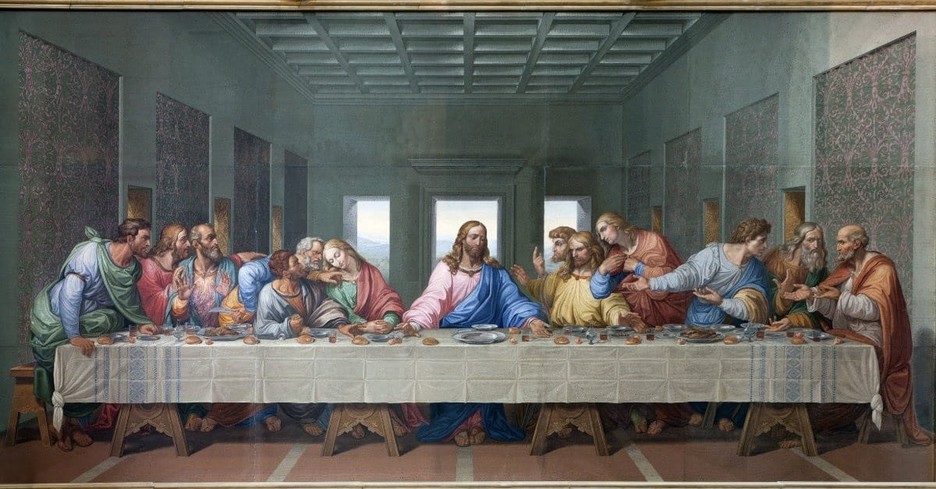
The New Covenant was inaugurated by the Lord Jesus Christ on the night before His crucifixion. During the Last Supper, He declared:
“This cup is the new testament in my blood, which is shed for you.”Luke 22:20, KJV
The Greek term diathēkē, translated “testament,” also means “covenant.” Here, Jesus identifies His impending death as the sacrificial basis for the New Covenant. The covenant was thus ratified by His blood, fulfilling the typological sacrifices of the Old Covenant and inaugurating a new dispensation of grace.
The apostle Paul echoes this truth, “After the same manner also he took the cup, when he had supped, saying, This cup is the new testament in my blood: this do ye, as oft as ye drink it, in remembrance of me.” 1 Corinthians 11:25, KJV
In Christ’s death, the old system of law was brought to completion. The veil of the temple was rent in twain (Matthew 27:51), symbolizing the new and living way into God’s presence.
The Participants of the New Covenant
Israel’s Future Participation
From a Dispensational perspective, the New Covenant is made with Israel, as Jeremiah explicitly states. It guarantees Israel’s national restoration, forgiveness of sins, and spiritual renewal in the coming Millennial Kingdom.
“And they shall teach no more every man his neighbour, and every man his brother, saying, Know the LORD: for they shall all know me, from the least of them unto the greatest of them, saith the LORD: for I will forgive their iniquity, and I will remember their sin no more.” Jeremiah 31:34, KJV
Israel’s full enjoyment of this covenant awaits their future repentance and national turning to Messiah at His Second Coming (cf. Romans 11:26–27).
The Church’s Present Participation
Though the covenant was made with Israel, the Church presently partakes in its spiritual blessings, forgiveness, regeneration, and the indwelling of the Holy Spirit. Paul teaches, “Who also hath made us able ministers of the new testament; not of the letter, but of the spirit: for the letter killeth, but the spirit giveth life.”2 Corinthians 3:6, KJV
Thus, the Church experiences the spiritual realities of the New Covenant without displacing Israel’s national promises. This aligns with the Dispensational understanding that the Church and Israel remain distinct peoples in God’s redemptive plan.
The Blessings of the New Covenant
- Forgiveness of Sins
“For I will forgive their iniquity, and I will remember their sin no more.” Jeremiah 31:34, KJV
The New Covenant provides complete and eternal forgiveness through the shed blood of Christ.
- Internal Transformation
“I will put my law in their inward parts, and write it in their hearts.” Jeremiah 31:33, KJV
God transforms believers inwardly by the indwelling Holy Spirit, fulfilling what the Mosaic Law could not accomplish.
- Personal Relationship with God
“They shall all know me, from the least of them unto the greatest of them.” Jeremiah 31:34, KJV
The covenant restores intimate fellowship between God and His people.
- Eternal Security and Peace
“And I will make an everlasting covenant with them, that I will not turn away from them, to do them good.” Jeremiah 32:40, KJV
The New Covenant guarantees the eternal preservation and blessing of God’s people.
The Relationship to Other Covenants
Dispensational theology recognizes a progressive unfolding of God’s covenants.
| Covenant | Key Scripture | Parties | Type | Main Promise | Relation to New Covenant |
| Abrahamic | Genesis 12:1–3 | God & Abraham | Unconditional | Land, Seed, Blessing | Basis for all later covenants; fulfilled spiritually in New Covenant |
| Mosaic | Exodus 19–24 | God & Israel | Conditional | Blessing for obedience | Superseded by the New Covenant |
| Davidic | 2 Samuel 7:12–16 | God & David | Unconditional | Eternal throne and kingdom | Fulfilled in Christ’s Messianic reign |
| New | Jeremiah 31:31–34 | God & Israel | Unconditional | Forgiveness, regeneration, Spirit | Fulfilled spiritually now, fully in the Kingdom |
The Future Fulfillment in the Millennium
Dispensationalists hold that the ultimate fulfillment of the New Covenant will occur in the Millennial Kingdom, when Israel as a nation will be restored to faith and blessed in the land promised to Abraham. At that time:
- Israel will experience national regeneration (Ezekiel 36:24–28).
- The law will be written on their hearts.
- The Messiah will reign in righteousness from Jerusalem (Isaiah 9:6–7).
- The nations will also share in the blessings that flow from Israel’s covenant relationship with God.
Thus, while the Church enjoys the spiritual blessings of the New Covenant today, Israel’s national and territorial blessings await the future.
Conclusion
The New Covenant represents the culmination of God’s redemptive purpose, grounded in Christ’s finished work, ministered by the Holy Spirit, and guaranteed by divine faithfulness. It bridges the dispensations of Law and Grace, uniting the people of God in one plan of salvation while preserving the distinct roles of Israel and the Church.
Through the blood of Christ, believers today are recipients of its spiritual blessings, and Israel will one day experience its national fulfillment when “all Israel shall be saved” (Romans 11:26, KJV).
The New Covenant thus stands as the crowning testament of God’s unchanging grace and His eternal purpose to dwell among a redeemed people forever.
Summary Chart: The New Covenant (Dispensational View)
| Aspect | Description | Scripture (KJV) |
| Covenant Name | The New Covenant | Jeremiah 31:31–34 |
| Parties | God and Israel (House of Israel & Judah) | Jeremiah 31:31 |
| Mediator | Jesus Christ | Hebrews 8:6; 9:15 |
| Ratified By | The blood of Christ | Luke 22:20 |
| Nature | Unconditional, eternal, gracious | Jeremiah 32:40 |
| Present Application | Spiritual blessings shared by the Church | 2 Corinthians 3:6; Ephesians 1:7 |
| Future Fulfillment | Israel’s national restoration in the Millennium | Ezekiel 36:24–28; Romans 11:26–27 |
| Key Blessings | Forgiveness, regeneration, indwelling Spirit, knowledge of God | Jeremiah 31:33–34 |
| Relation to Law | Supersedes the Mosaic Covenant | Hebrews 8:13 |
| Dispensational Significance | Marks the transition from Law to Grace; full realization in the Kingdom | Romans 11; Revelation 20 |




Leave a comment