
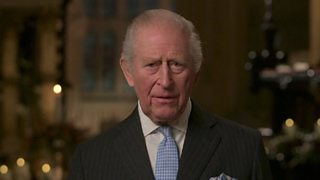
On Christmas Day 2025, King Charles III delivered his fourth annual Christmas broadcast to the United Kingdom and the wider Commonwealth from the Lady Chapel of Westminster Abbey, a setting heavy with history and symbolism. The address, focusing on themes of unity, compassion and pilgrimage, was clearly crafted to speak to societies grappling with political divisions, conflict abroad and the pace of modern life.
Yet, beneath its grand themes and thoughtful metaphors, the speech risks feeling both overly general and insufficiently attuned to the gritty realities most citizens face today.
A Carefully Curated Tone of Hope
King Charles framed his speech around the concept of pilgrimage, both literal and metaphorical, urging listeners to journey forward while reflecting on the past. Drawing on his state visit to the Vatican and shared prayer with Pope Leo, the King used religious imagery to underscore a message of interfaith commonality.
The choice of Westminster Abbey, long associated with coronations and spiritual pilgrimage, was clearly intentional. It allowed the broadcast to intertwine royal tradition with a broader message of historical continuity.
References to the 80th anniversary of the end of the Second World War and the valor of veterans were notable, invoking shared sacrifice as a model for contemporary unity. A Ukrainian choir’s carol provided a poignant, symbolic nod to international conflict and the King’s expressed hope for peace.
On its face, the speech was a plea for kindness, reconciliation and compassion, values many can agree with in abstract.
Too Safe, Too Abstract?
Yet therein lies a core criticism. For all its sweeping references to spiritual unity and courage, the address skirted the thornier specifics of today’s political and social challenges. Britain’s austerity-strained public services, intensifying debates over migration policy, rising living costs and inter-community tensions were mentioned, if at all, only in passing, more as background than focused critique or engagement.
While the monarch’s constitutional role requires political neutrality, this is not a liability when addressing moral or civic crises. Many viewers will have hoped for a voice that more directly acknowledged the lived hardships of ordinary people, beyond abstract appeals to compassion.
The King spoke of the value of “pausing” from our fast-paced digital lives and quoted T. S. Eliot about stillness, elegant, perhaps, but precariously distant from the urgent, everyday concerns of mental health crises, economic insecurity and generational inequalities.
Symbolism Over Substance?
The address leaned heavily on symbolism, the Abbey, wartime remembrance, and even classical literary references. This was compelling imagery, but it highlights another tension: how a centuries-old institution translates its relevance into a world that, for many, feels sharply divided and secular.
The King’s emphasis on interfaith commonality and shared moral values is admirable. However, the optimistic tone can feel detached from the reality that such unity often requires political will, policy action and community leadership beyond ceremonial endorsement.
Furthermore, while his acknowledgement of individual bravery, from Bondi Beach to Manchester, recognised everyday heroism, the speech stopped short of interrogating why such acts of courage are increasingly required in a world marked by extremism and discord.
A Message for All or a Message That Didn’t Go Far Enough?
There is no denying that the address offered a soothing, dignified voice during a season traditionally reserved for reflection. For some viewers, especially within the Commonwealth, King Charles’s words may have resonated as a call for compassion and global fellowship.
However, the speech’s very caution reveals something about the modern monarchy itself: its role as moral guide, rather than agent of change. In choosing unity over critique, hope over hard questions, the speech ultimately reminded us that the monarch’s voice, while symbolically powerful, may not be the instrument suited to challenge or shape public policy or social reform.
For a world yearning not just for kindness but for solutions, the Christmas Day address felt, at times, reassuring but underwhelming, a message that comforts rather than confronts.




Leave a comment