
Recognising the spiritual dimension
The Bible warns believers that our warfare is not merely physical, but spiritual. As Paul writes, “For our struggle is not against flesh and blood, but against the rulers, against the powers, against the world forces of this darkness, against the spiritual forces of wickedness in the heavenly places.” (Eph 6:12)
This suggests that celebrations or festivals that have roots or symbols in “darkness” or the occult should at least be approached with caution.
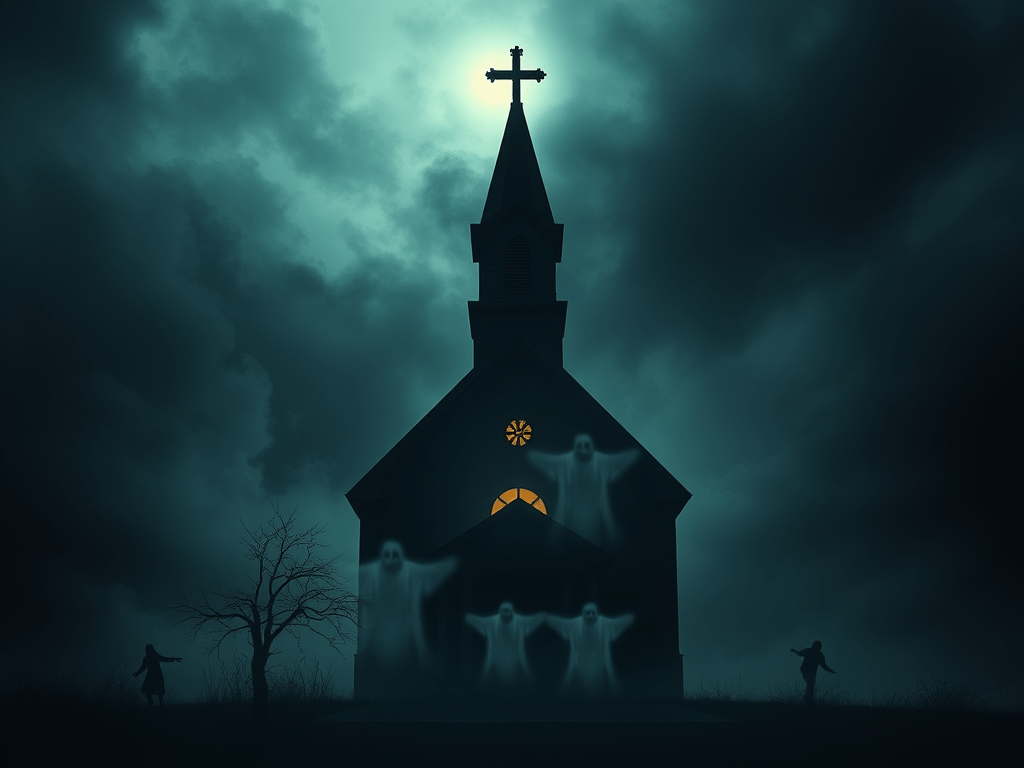
Halloween’s associations with the occult, death and darkness
Although many who observe Halloween do so simply for fun, the holiday has historical roots and cultural connotations tied to death, spirits, witchcraft and the occult. From a Christian vantage point, these associations can raise concern. Christians may ask: “If this day honours or plays with themes of sorcery, spirit-calling, ghosts or the dead, is it appropriate for one who is called to be holy (set apart) to the Lord?”
Biblical injunctions against witchcraft, divination and spiritism
The Old Testament gives explicit commands forbidding certain occult practices:
“When you enter the land which the LORD your God gives you, you shall not learn to imitate the detestable things of those nations. There shall not be found among you anyone who makes his son or his daughter pass through the fire, one who uses divination, one who practices witchcraft, or one who interprets omens, or a sorcerer, or one who casts a spell, or a medium, or a spiritist, or one who calls up the dead. For whoever does these things is detestable to the LORD …” (Deut 18:9-12)
This teaching and command is also found in the New Testament. Meaning that the things that God forbid for Israel is also forbidden for the Church. Both the Old and New Testaments strongly warns against any association with witchcraft, spiritism, darkness and the occult.
“Now the deeds of the flesh are evident, which are: … idolatry, sorcery … of which I forewarn you … that those who practise such things will not inherit the kingdom of God.” (Gal 5:19-21)
These scriptures are offered to show that engaging even indirectly with practices that resemble or evoke occultism, spirit-worship, witchcraft or the dead can conflict with a believer’s calling.
A call to holiness and separation
Christians are repeatedly called to be set apart from the patterns of this world:
“You shall be blameless before the LORD your God.” (Deut 18:13)
“Therefore take up the full armor of God, so that you will be able to resist in the evil day, and, having done everything, to stand firm.” (Eph 6:13)
When a holiday carries themes of darkness, fear, death, the supernatural, or the occult, some Christians conclude that participation undermines the distinctiveness they are called to as followers of Christ.
The risk of confusing cultural practice with spiritual truth
Participating in Halloween may blur the line between harmless fun and complicity in symbols or themes that the Bible condemns. While many celebrate without any intention of occult involvement, believers must ask themselves whether the symbolism is compatible with their faith and whether it might send mixed messages to children or neighbours about the nature of the gospel.
Alternatives for Christian families
Rather than defaulting to Halloween, some Christian families adopt alternative celebrations: a “Harvest Festival” (without ghosts/witches), a “Light Party” (celebrating Christ as Light), or simply choosing to stay home, spend time in worship and prayer, or host an event centred on Christian teaching. The point is not legalism but discernment, choosing wisely what one honours.
Key Scripture Passages
Here are the passages referenced and others that underpin the argument.
Deuteronomy 18:9-14: “When you enter the land … you shall not learn to imitate the detestable things of those nations … there shall not be found among you anyone who uses divination, practices witchcraft … For whoever does these things is detestable to the LORD…”
Leviticus 19:26: “You shall not eat anything with the blood… nor practice divination or soothsaying.”
1 Samuel 15:23: “For rebellion is as the sin of divination, and self-will is as iniquity and idolatry.”
Galatians 5:19-21: “Now the deeds of the flesh are evident … idolatry, sorcery … those who practice such things will not inherit the kingdom of God.”
Ephesians 6:10-13: “Finally, be strong in the Lord … Put on the full armor of God … For our struggle is not against flesh and blood, … therefore take up the full armor of God, so that you will be able to resist in the evil day, and having done everything, to stand firm.”
Revelation 9:21: “and they did not repent of their murders nor of their sorceries nor of their immorality nor of their thefts.”
Against Witchcraft, Sorcery, and Occult Practices
Leviticus 20:6 — “As for the person who turns to mediums and to spiritists, to play the harlot after them, I will also set My face against that person and will cut him off from among his people.”
Isaiah 8:19–20 — “When they say to you, ‘Consult the mediums and the spiritists who whisper and mutter,’ should not a people consult their God? Should they consult the dead on behalf of the living? To the law and to the testimony! If they do not speak according to this word, it is because they have no dawn.”
2 Chronicles 33:6 — “He made his sons pass through the fire in the valley of Ben-hinnom; and he practiced witchcraft, used divination, practiced sorcery and dealt with mediums and spiritists. He did much evil in the sight of the LORD, provoking Him to anger.”
Acts 19:18–19 — “Many also of those who had believed kept coming, confessing and disclosing their practices. And many of those who practiced magic brought their books together and began burning them in the sight of everyone; and they counted up the price of them and found it fifty thousand pieces of silver.”
Revelation 21:8 — “But for the cowardly and unbelieving and abominable and murderers and immoral persons and sorcerers and idolaters and all liars, their part will be in the lake that burns with fire and brimstone, which is the second death.”
On Spiritual Darkness vs. Light
John 3:19–20 — “This is the judgment, that the Light has come into the world, and men loved the darkness rather than the Light, for their deeds were evil. For everyone who does evil hates the Light, and does not come to the Light for fear that his deeds will be exposed.”
Ephesians 5:8–11 — “For you were formerly darkness, but now you are Light in the Lord; walk as children of Light … Do not participate in the unfruitful deeds of darkness, but instead even expose them.”
Romans 13:12 — “The night is almost gone, and the day is near. Therefore let us lay aside the deeds of darkness and put on the armor of light.”
2 Corinthians 6:14–17 — “Do not be bound together with unbelievers; for what partnership have righteousness and lawlessness, or what fellowship has light with darkness? Or what harmony has Christ with Belial … Therefore, ‘Come out from their midst and be separate,’ says the Lord.”
On Christian Separation and Holiness
1 Peter 1:14–16 — “As obedient children, do not be conformed to the former lusts which were yours in your ignorance, but like the Holy One who called you, be holy yourselves also in all your behavior; because it is written, ‘You shall be holy, for I am holy.’”
James 4:4 — “Do you not know that friendship with the world is hostility toward God? Therefore whoever wishes to be a friend of the world makes himself an enemy of God.”
Romans 12:2 — “And do not be conformed to this world, but be transformed by the renewing of your mind, so that you may prove what the will of God is, that which is good and acceptable and perfect.”
1 John 2:15–17 — “Do not love the world nor the things in the world. If anyone loves the world, the love of the Father is not in him. … The world is passing away, and also its lusts; but the one who does the will of God lives forever.”
Conclusion
While Christians differ in how they approach Halloween, the compelling biblical arguments for abstaining centre on the following: the holiday’s associations with death, darkness, spirits and witchcraft; clear biblical commands against involvement in occult practices; the call to holiness and separation; and the fact that believers are engaged in a spiritual battle rather than mere cultural festivities.
For Christian families and individuals, the question is not simply “Can we have fun?” but “Does this participation honour Christ, uphold the gospel, and reflect the light we are called to be?” For many, the answer leads to choosing not to celebrate Halloween and instead to honour Christ in a way that aligns with Scripture.


Leave a comment