
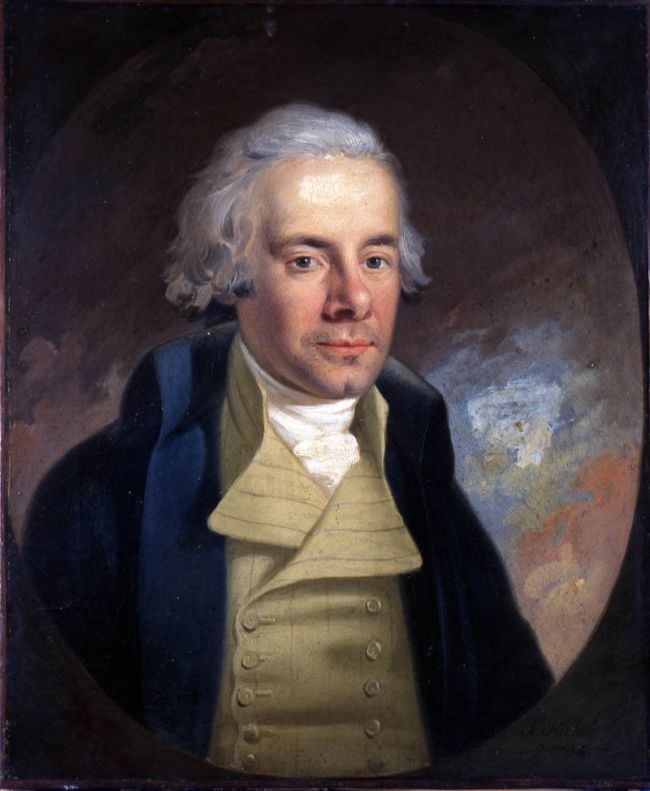
William Wilberforce (24 August 1759 – 29 July 1833) was a British politician, philanthropist, and a prominent figure in the effort to end the Atlantic slave trade. Born in Kingston upon Hull, Yorkshire, he started his political career in 1780 and served as an independent Member of Parliament (MP) for Yorkshire from 1784 to 1812. In 1785, he experienced a religious transformation and became an Evangelical Anglican, leading to significant changes in his way of life and a lifelong commitment to reform.
In 1787, Wilberforce met Thomas Clarkson and a group of activists opposing the transatlantic slave trade, which included Granville Sharp, Hannah More, and Charles Middleton. They convinced him to advocate for abolition, and he emerged as a leading abolitionist in England. He led the parliamentary campaign against the British slave trade for two decades until the Slave Trade Act was passed in 1807.
Wilberforce believed strongly in the significance of religion, morality, and education. He supported various causes and initiatives, including the Society for the Suppression of Vice, British missionary activities in India, the establishment of a free colony in Sierra Leone, the founding of the Church Mission Society, and the Society for the Prevention of Cruelty to Animals. His conservative views also led him to back politically and socially restrictive laws, prompting criticism that he overlooked domestic injustices while advocating for those enslaved elsewhere.
In his later years, Wilberforce endorsed the movement for the total abolition of slavery and remained engaged after resigning from Parliament in 1826 due to health issues. His efforts contributed to the Slavery Abolition Act of 1833, which eliminated slavery in much of the British Empire. Wilberforce passed away just three days after learning that the act’s passage in Parliament was assured. He was interred in Westminster Abbey, near his friend William Pitt the Younger.




Leave a comment