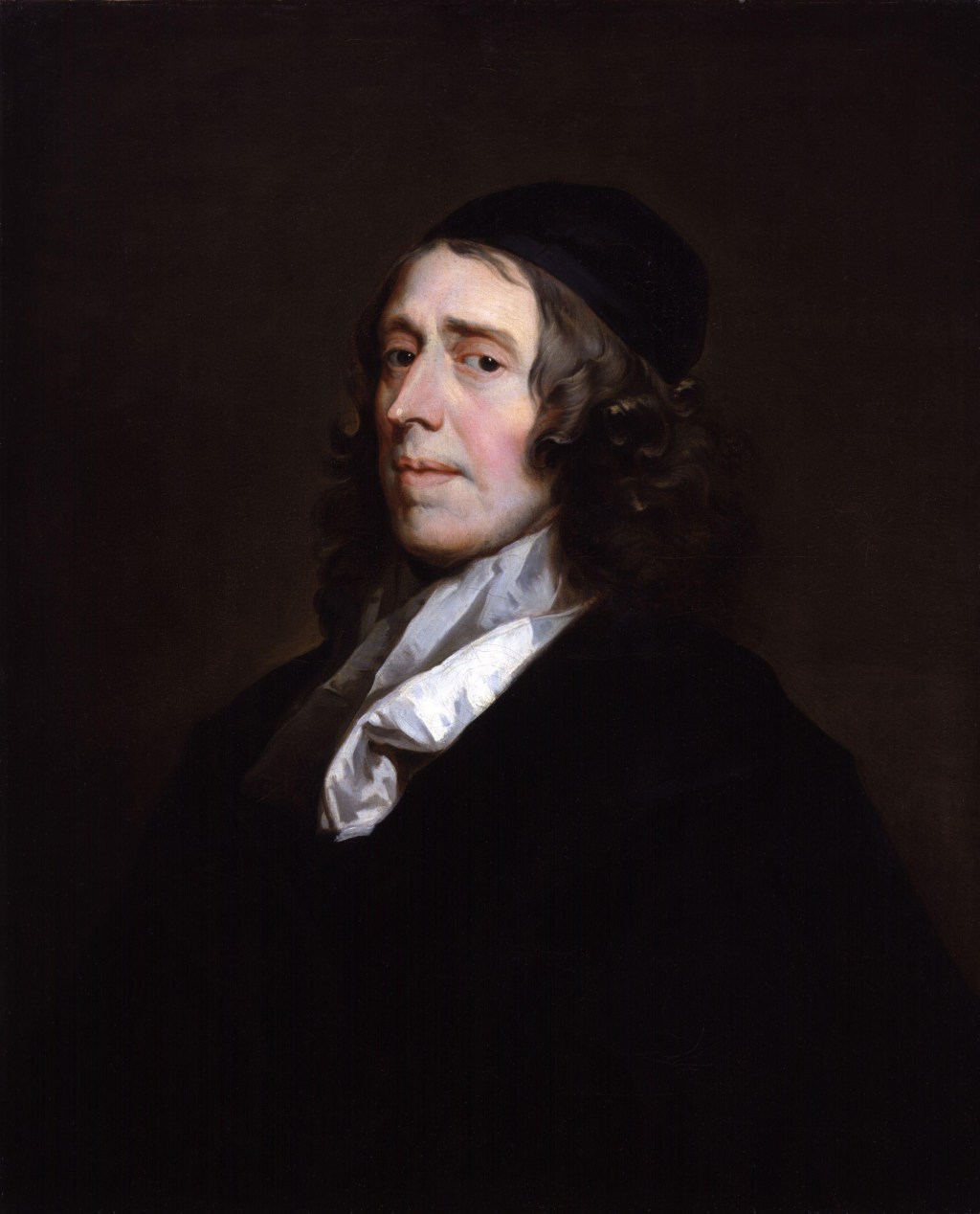
John Owen (1616 – 24 August 1683) was a leader in the English Puritan Nonconformist church, a theologian, and served as vice-chancellor of the University of Oxford. Considered one of the leading theologians in England during his time, Owen was a prolific writer who contributed articles, treatises, Biblical commentaries, poetry, children’s catechisms, and other literary works. Many of his writings embody the Reformed Christian tradition. Today, Owen’s works continue to be widely read among Reformed Christians, especially noted for his discussions on sin and human depravity.
He served for a short time as a member of parliament representing the university’s constituency, participating in the First Protectorate Parliament from 1654 to 1655. Owen’s backing of the parliamentarians during the English Civil War led him to deliver a sermon before parliament the day after Charles I’s execution, and he eventually became an aide and chaplain to Oliver Cromwell.
Owen, who hailed from Welsh ancestry, was born in Stadhampton, Oxfordshire, and received his education at Queen’s College, Oxford (B.A. 1632, M.A. 1635); at that time, the college was recognized by Thomas Fuller for its notable metaphysicians. Raised as a Puritan, Owen was expelled from Oxford in 1637 due to Laud’s new regulations and subsequently served as a chaplain and tutor to Sir Robert Dormer’s family and later to Lord Lovelace’s. With the onset of the English Civil War, he aligned himself with Parliament, which resulted in the loss of his position and his chances to inherit his Welsh Royalist uncle’s wealth. For some time, he resided in Charterhouse Yard, grappling with religious uncertainties. His doubts were resolved after hearing a sermon by a stranger at St Mary Aldermanbury church, where he had intended to listen to Edmund Calamy the Elder. Owen’s initial work, The Display of Arminianism (synergism) (1642), passionately defended Calvinism (monergism). It was dedicated to the religious committee and earned him the position at Fordham in Essex, which had become vacant following the removal of a “scandalous minister.” At Fordham, he dedicated himself to his parish work and wrote only The Duty of Pastors and People Distinguished until 1646, when the previous incumbent passed away, leading to the lapse of his presentation to the patron, who then appointed someone else.
In 1644, Owen wed Mary Rooke (who passed away in 1675). The pair had 11 children, with ten of them dying in infancy. Only one daughter lived to reach adulthood, got married, and soon after succumbed to consumption. Eighteen months following the death of his first wife, he took Dorothy D’Oyley, the affluent widow of Thomas D’Oyley, a member of the landlord family in Stadhampton, as his second wife.
The main works of his later years included “On Apostasy” (1676), which provides a bleak portrayal of religion during the Restoration period; “On the Holy Spirit” (1677–78); and “The Doctrine of Justification” (1677). In 1680, after Stillingfleet delivered a sermon titled “The Mischief of Separation” on May 11, Owen defended Nonconformists against accusations of schism in his “Brief Vindication.” Baxter and Howe also responded to Stillingfleet, who countered with “The Unreasonableness of Separation.” Owen provided yet another response and then left the debate to a host of eager participants. From that point until his death, he remained engaged in constant writing, only interrupted by health issues, including kidney stones and asthma, as well as the unfounded accusation of involvement in the Rye House Plot. His most significant work was the “Treatise on Evangelical Churches,” which encompassed his final thoughts on church governance. He passed away in Ealing, twenty-one years after he had been expelled on St. Bartholomew’s day in 1662, and was interred on September 4, 1683, in Bunhill Fields.



Leave a comment