
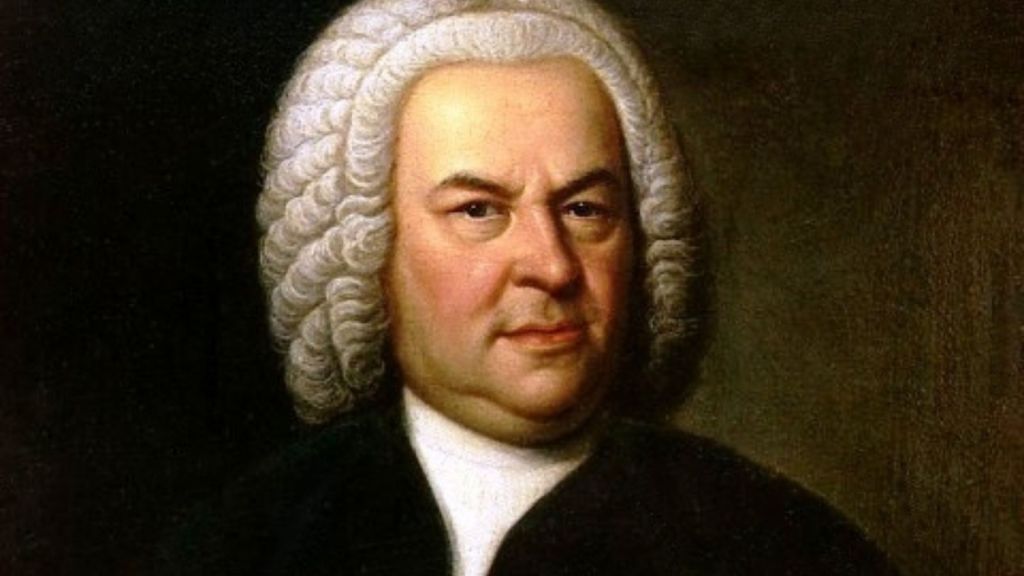
Johann Sebastian Bach (31 March [O.S. 21 March] 1685 – 28 July 1750) was a German composer and musician from the late Baroque era. He is renowned for his extensive body of work across various instruments and musical forms, which include the orchestral Brandenburg Concertos; solo pieces like the cello suites and the sonatas and partitas for solo violin; keyboard compositions such as the Goldberg Variations and The Well-Tempered Clavier; organ music like the Schübler Chorales and the Toccata and Fugue in D minor; and choral pieces like the St Matthew Passion and the Mass in B minor. Since the Bach Revival of the 19th century, he has been celebrated as one of the most significant composers in the history of Western music.
The Bach family had already produced numerous composers by the time Johann Sebastian was born as the youngest child of city musician Johann Ambrosius in Eisenach. After losing his parents at the age of 10, he spent five years living with his eldest brother, Johann Christoph, before pursuing further musical studies in Lüneburg. In 1703, he returned to Thuringia, where he worked as a musician for Protestant churches in Arnstadt and Mühlhausen, and spent extended periods in the courts of Weimar, where he broadened his organ repertoire, and Köthen, where he primarily focused on chamber music. In 1723, he was appointed Thomaskantor (cantor at St Thomas’s) in Leipzig, where he composed for the main Lutheran churches in the city and for the university’s student ensemble, Collegium Musicum. By 1726, he began to publish his organ and other keyboard compositions. In Leipzig, as was the case with some of his previous positions, he experienced strained relationships with his employer. This situation improved somewhat when his ruler, Augustus III of Poland, designated him as court composer in 1736. During the final decades of his life, Bach revisited and expanded many of his earlier works. He passed away at the age of 65 in 1750 due to complications following eye surgery. Among his twenty children, four—Wilhelm Friedemann, Carl Philipp Emanuel, Johann Christoph Friedrich, and Johann Christian—went on to become composers.
Bach enhanced traditional German musical styles through his expertise in counterpoint, harmonic and thematic structure, and his incorporation of rhythms, forms, and textures from outside influences, especially from Italy and France. His body of work includes hundreds of cantatas, both sacred and secular. He wrote Latin church music, Passions, oratorios, and motets. He incorporated Lutheran hymns not only in his larger vocal pieces but also in his four-part chorales and sacred songs. Bach extensively composed for organ and other keyboard instruments, as well as concertos for violin and harpsichord, along with suites for both chamber and orchestral music. Many of his compositions feature contrapuntal techniques such as canon and fugue.
In the 18th century, Bach was mainly recognized as an organist. By 2013, over 150 recordings of his work, The Well-Tempered Clavier, had been produced. Numerous biographies of Bach appeared in the 19th century, and by the century’s close, all his known compositions had been published. The study of Bach continued to spread through journals (and later websites) dedicated to him, along with other publications like the Bach-Werke-Verzeichnis (BWV, a numbered catalog of his works), and new critical editions of his music. His compositions gained further popularity through a variety of arrangements, such as “Air on the G String” and “Jesu, Joy of Man’s Desiring,” as well as recordings, including three different box sets of performances of his entire body of work to commemorate the 250th anniversary of his passing.





Leave a comment