
In this brief essay, I will set out why I think monarchy is superior to any other form of government. In the Western world we are taught to regard democracy as the ideal, and it has in many ways become an idol. Anyone who criticizes democracy is often seen as strange and an odd person. Democracy may read well on paper, but in practice it falls short. It originated with pagan Greek philosophers and is not grounded in Holy Scripture. While certain elements of democracy can be found in Scripture, overall it is not a Biblical Christian concept.
For instance, the Old Testament describes God appointing kings to govern particular lands. Some of those biblical rulers promoted the common good, while others were corrupt and acted as a curse on the regions they governed. In short, that is why I view monarchy as preferable to democracy.
My main point is that monarchy is often considered one of the most stable forms of government. History provides many examples of enduring, stable polities led by monarchs. From childhood, future kings and queens are instructed in just rule and schooled in the skills and practice of leadership. Consequently, they are usually better prepared and educated to fulfill the responsibilities of office, and they tend to hold moral and ethical convictions.
Secondly, a monarchy can lessen political polarization and corruption in a country. By curbing partisan contestation it tends to produce a more tranquil society. With a single person as head of state, and sometimes head of government, for life, opposition focuses on that one individual rather than on several leaders or political parties. In such systems the monarch usually has the final authority, meaning those born to rule actually exercise power. There are also fewer changes of leadership in an absolute monarchy; by contrast, in the United Kingdom power can shift every few years (typically about every five), which some see as offering less political stability. A monarchy also helps sustain a nation’s cultural identity, with the royal family embodying its values and beliefs.
One reason I’m not a strong supporter of democracy is that it relies on the idea that the people hold the power, even when many voters lack knowledge or education about the issues they’re asked to decide. Most people vote for what benefits them or what they want, rather than for what is best for the country or the common good.
For instance, picture yourself on a plane having to choose which candidate should pilot it. Would you pick the person who promises first-class travel with the best food and drinks, or the one who offers economy seats and basic refreshments? Most people would opt for the first. What I didn’t mention earlier is that the first person has very little flight experience, while the second is the most capable and qualified for the role. That illustrates democracy: the majority decides, and power lies with the voters even when they pick the wrong candidate.
We observe this in most general elections. That is why politicians target voters’ personal needs and desires while having no real intention of honoring their campaign promises. For example, during the 2010 General Election Liberal Democrat leader Nick Clegg vowed to abolish tuition fees, which understandably attracted thousands of young people and students to vote for his party. Consequently, Clegg made substantial gains across the UK and won seats for the Liberal Democrats. Although they secured enough seats to support a Conservative-led government, that pledge was abandoned once they entered into government with the Conservatives. I am not singling out the Liberal Democrats here; I am merely using them as a clear example. Every political party does this to win votes. In a way they have to: if they were honest about the harsh reality of cuts and unpopular policies, voters would not support them. Regrettably, unpopular decisions sometimes must be taken for the common good.
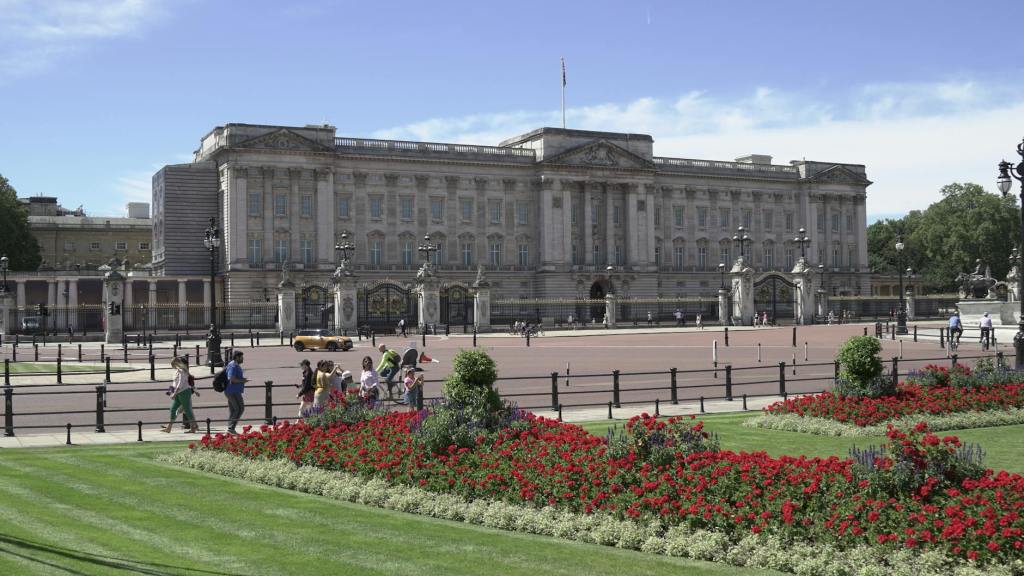
Returning to my earlier point, a monarchy brings people together more effectively than political parties. In the UK, people across the political spectrum recognise the advantages of the monarchy and generally agree it benefits British society, tourism and culture. The late Queen Elizabeth II was a positive force throughout her 70-year reign. That was clear when she died, roughly a quarter of a million people paid their respects in person by viewing her coffin as it lay in state in London.
Another point I would make is that a monarchy can be less costly than a republic. It also boosts tourism: in the UK millions travel each year to see royal palaces and parks. By comparison, the French presidency costs around £103 million and Italy’s head of state about £193 million. The British monarchy costs taxpayers roughly £40 million a year, but the income generated by tourism makes its existence economically defensible. Former Bank of England rate-setter Tim Besley produced a paper arguing that countries with “weak executive constraints” that switch from a non-hereditary to a hereditary leader (i.e., to a monarchy) see their annual average economic growth rise by about 1.03% per year. In 2015 the British Royal Family contributed £1.155 billion to the economy, with £535 million coming from tourism. The fashion sector has felt the impact too: the ‘Kate effect’ is credited with injecting £152 million into the industry, the ‘Charlotte Effect’ £101 million, and the ‘George Effect’ £76 million.
There is much more that could be written and said on this subject, but this is my view on why I think we should abandon the current system of democratically elected politicians and establish absolute monarchical rule. It is not perfect or free of mistakes, yet I believe it is a far better form of government. In earlier times, when kings and queens ruled England and later the United Kingdom, the country was in a much stronger state than it is today.
We have just witnessed our first coronation in over seventy years in the United Kingdom. On May 6, 2023, more than 20 million people tuned in to watch King Charles III crowned at Westminster Abbey. Monarchy is far from dead; it remains lively and strong. God Save the King!




Leave a comment