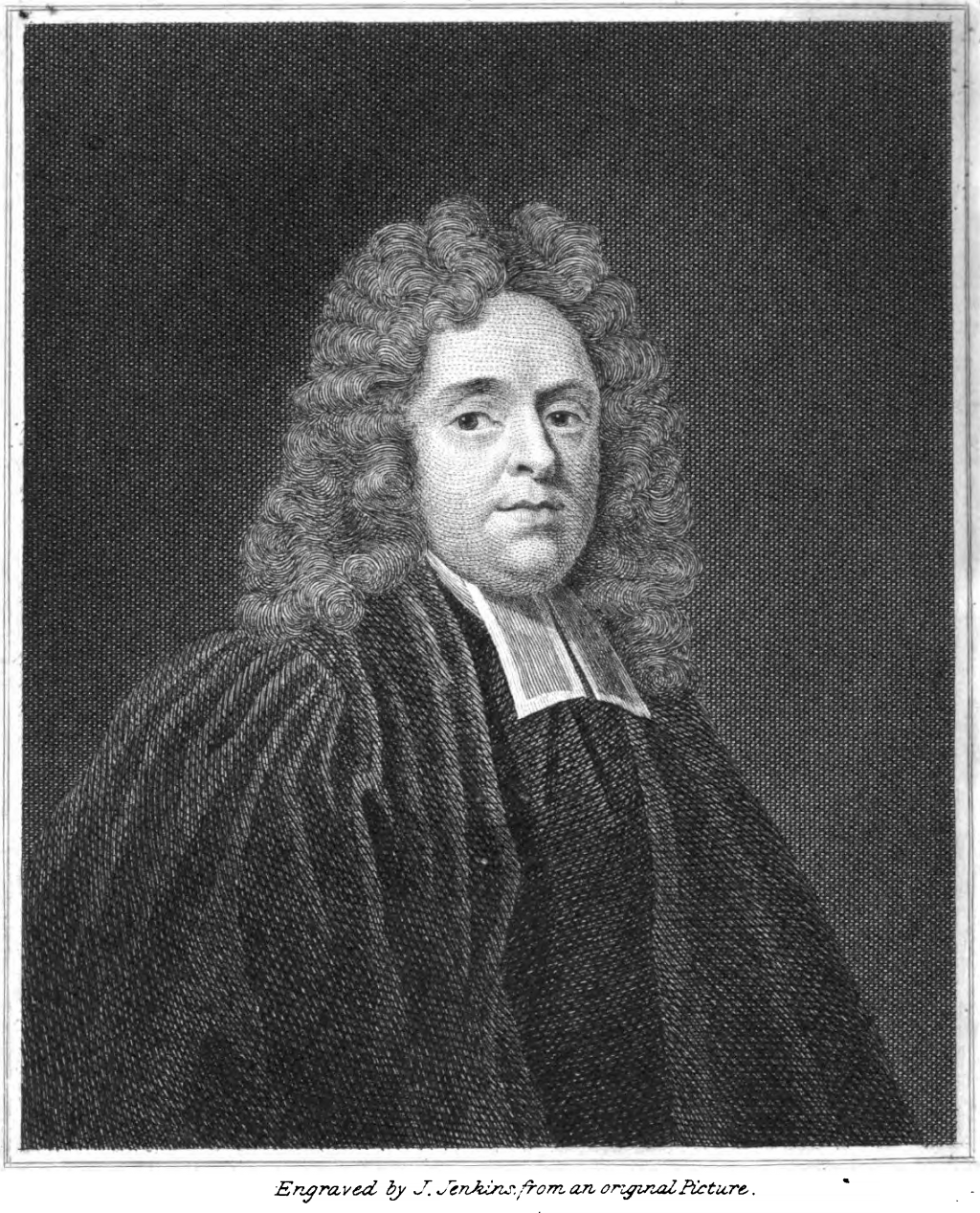
Matthew Henry (18 October 1662 – 22 June 1714) was a British Nonconformist and Presbyterian minister as well as an author. He was born in Wales but lived a significant part of his life in England. He is most renowned for his six-volume biblical commentary titled Exposition of the Old and New Testaments.
Matthew Henry was the second child of Philip and Kathrine Henry. He was born early at his mother’s family home, Broad Oak, a farmhouse located on the border of Flintshire and Shropshire. The local parish rector baptized him the following day. His father, Philip Henry, was a Church of England minister who had recently been removed from his position due to the Act of Uniformity 1662. As a young boy, he often suffered from fevers. Unlike many others who were ejected, Philip Henry had some personal resources, enabling him to provide a good education for his son. Henry’s sister was the diarist Sarah Savage.
By the time he was nine, Henry had the ability to write in Latin and read portions of the Greek New Testament. In 1668, he was taught grammar by William Turner, who was temporarily residing at Broad Oak. Much of Henry’s initial education was provided by his father at home. He honed his writing skills by copying his father’s sermons and showed a natural talent for public speaking from a young age. At eighteen, in 1680, his father enrolled him in a school in Islington, London, where he studied under the Nonconformist minister Thomas Doolittle. Henry later moved to Gray’s Inn, located in the center of the capital, to pursue law studies. While there, he also learned French and literature. However, he soon abandoned his legal studies in favor of theology. Henry was invited by his friend George Illidge to deliver his first sermon to a congregation in Nantwich. After receiving positive feedback, he returned to preach two more times that summer.
In 1686, a local Nonconformist minister extended an invitation for him to relocate to Chester, Cheshire, to establish a new congregation. He was initially reluctant to accept, as he did not want to draw members away from an existing minister, but he eventually agreed after persistent encouragement from Harvey. Henry was ordained on May 9, 1687, by a group of six Nonconformist ministers and presented a Latin-written paper as part of the ordination process. He subsequently became the minister of a new Presbyterian congregation in Chester. Under his guidance, the congregation prospered, and in 1699, he oversaw the construction of a new building. While in Chester, Henry also founded the Presbyterian Chapel on Trinity Street. Once he settled in Chester, he started to travel to surrounding cities to preach and became a member of the local Chester union of ministers. Henry remarked about his time in Chester, “I cannot think of leaving Chester until Chester leaves me.”
After relocating to Chester, he wed Kathrine Hardware on July 19, 1687, despite her mother’s initial disapproval of the union. Kathrine’s parents later settled in Chester, and Henry and his spouse resided with them. Shortly following the arrival of their first child, Kathrine passed away from smallpox on February 14, 1689, at the age of 25. He named the newborn Kathrine in honor of her mother, but the infant sadly died 15 months later. He remained living with the Hardwares after his wife’s passing and continued to fulfill his ministerial responsibilities.
He met Mary Warburton, who was a family member of Mrs. Hardware. On July 8, 1690, he wed Mary Warburton in Chester. Their second child, Elizabeth, was born on April 2, 1691, but unfortunately passed away in July 1692 while still an infant. A third child was born in 1693 but died just three weeks after being born.
By the age of 26 in 1688, the frequency of his speaking engagements began to affect his health, and he often suffered from fevers. A letter from his father advised him to “…keep a tight grip on your fervor [when speaking].” His passionate delivery resonated with his audience, enhancing his popularity. There were times when he could evoke tears from his listeners. He became a sought-after speaker, receiving numerous invitations to give talks and lectures, and he traveled nearly every week to various cities to speak.
He dedicated considerable time to preparing his sermons and lectures ahead of time, favoring an expository style of speaking. For each presentation, he selected various foundational texts to elaborate on his main subject. His teaching philosophy emphasized choosing clear and essential truths for his sermons and striving to make them even clearer. While writing, he adhered closely to the literal meanings of biblical texts, which later served as the foundation for his commentary.
From 1687 to 1712, Matthew Henry resided in Chester. In 1694, he and his wife welcomed their daughter Esther, who grew to adulthood. On June 24, 1697, another daughter, Ann, was born, but sadly, she passed away in infancy in 1698 due to a local outbreak of measles, which greatly saddened Henry as she was his fourth child to die young. In 1700, Matthew and his wife Mary had their first son, Philip, who later adopted his mother’s surname, Warburton. Another daughter, Elizabeth, followed in 1701. In August 1703, they welcomed another daughter, naming her Sarah in honor of Henry’s older sister. Lastly, two more children, Theodosia in 1708 and Mary in 1711, were born and survived to adulthood.
In 1698, Henry went to London to give his first speech since relocating to Chester. During his journey to London, he made speaking stops at Nantwich, Newcastle, Lichfield, and several other towns along the way. By the end of this period, he was often invited to speak in London, where he later settled. He traveled to London again in 1704, and this time Mary went with him. Until then, his health had been relatively good despite his busy schedule. In August 1704, he collapsed while speaking but quickly got back to it. Over the next two days, he traveled to Nantwich and then to Haslington. After returning to Chester, he was confined to bed with a fever for three weeks.
In 1712, he relocated to Mare Street in Hackney after agreeing to lead the ministry of the Hackney congregation. He commenced his work there on May 18, 1712, with a congregation of fewer than one hundred members. Additionally, he would travel to Wapping, Rotherhithe, and nearby areas to deliver evening lectures before returning to his responsibilities in Hackney. Henry also started conducting catechetical lectures in London. His Exposition of the Old and New Testaments was approaching publication, which was one of the reasons for his move to Hackney, as it was near the publisher. By 1713, he experienced a decline in health following a visit back to Chester.
In 1713, he started experiencing regular episodes of nephritis. Despite this, he continued to fulfill his numerous speaking commitments and work on his commentary. On June 21, 1714, Henry was on a speaking tour in the Chester area and was heading back to Hackney. During the journey, he fell off his horse but claimed to be uninjured and insisted on proceeding to Nantwich for a scheduled speech. His companions observed that he seemed lacking in vitality. That evening, he could no longer continue and stayed at the Queen’s Aid House in Nantwich. On June 22, 1714, he passed away from apoplexy, reuniting with his God.



Leave a comment