
Jesus Turns Water into Wine (Verses 1-11)
In the second chapter of John’s Gospel, we read about a wedding that Jesus and his disciples were invited to. We are not told the names of the bride and groom, nor are we told why Jesus was invited. It is likely that the couple to be married were known to Jesus and his mother, Mary as the wedding was in a very small village called, Cana. The village of Cana is about 9 miles north of Nazareth. This humble village was the home village of Nathaniel whom we met in chapter 1. John chapter 2 is the start of Jesus’s public ministry. He is now about to embark on the ministry for which he came into the world.
John tells us that the wedding at Cana was on the third day probably meaning that the event took place three days after Jesus called his first disciples who were Philip and Nathaniel. When the wedding feast was in progress a very embarrassing situation occurred; the wine ran out. This would have been socially very awkward. Mary brought the problem to Jesus’s attention. He responded in such a way as if he was saying, “What has that got to do with me” or “That is not my problem.” His hour had not yet come. Jesus was looking ahead to the cross. His time to start on the public way had not yet come. Jesus is saying that since he was now embarked on his special service for his Father all activity would be as God ordained. This event at Cana was indeed appointed by God.
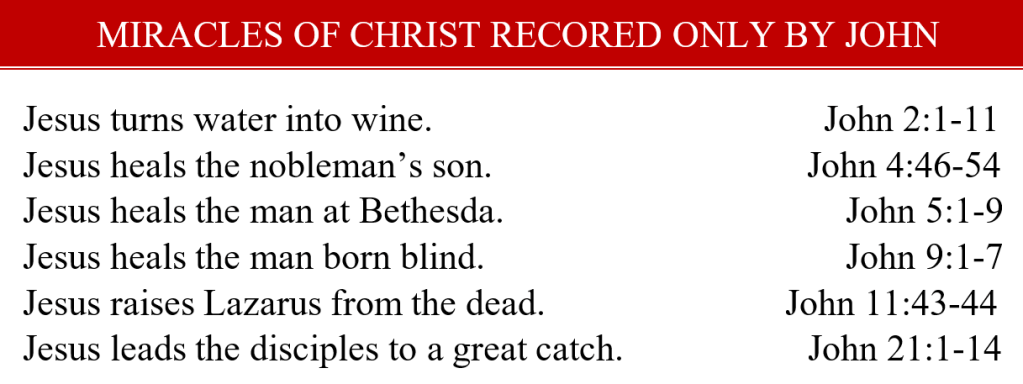
Jesus commanded that the water jugs should be filled to the brim with water. In the first century, Israel’s water was unsafe to drink as it was not clean and free from infection. People drank fermented wine as the alcohol made the beverage safe to drink. The fact that Jesus asked the jugs to be filled to the top is a very important detail. If the jugs were not filled to the brim Christ’s doubters and accusers could say Jesus just added wine to the water. The fact that nothing could be added to the water points to the miracle that Christ did. Jesus created the wine from nothing but water.
When the master of the feast tasted the beverage, it was the finest wine. The bridegroom was unaware of the miracle that had just taken place. In verse 11 John tells us about the purpose for this miracle at Cana of Galilee. This was a sign of Jesus’s deity so that men and women believe in Him and His power to create.
The Temple is Cleansed by Jesus (Verses 12-25)
Jesus went to Jerusalem for the Jewish Passover. When he arrived, he found that the temple had been turned into a marketplace. This caused righteous anger within Jesus because the temple was a place set apart from the day-to-day things of the world and was for the worship of God. Jesus teaches us that the house of God was not for trade. There is nothing wrong with trade, but the time and place were not appropriate. Psalm 69:9 speaks of zeal for the place of prayer.
In verse 19 Jesus says, “Destroy this temple, and the three days I will raise it up.” We know that he was talking about his own body, but those who heard these words thought Christ was talking about the temple built of stone. These words of Christ are very informative regarding the relationship between the body of Christ and the place of worship. The assembly who are the people of God are part of Christ’s body. Believers are buried with Christ and raised to walk in newness of life at their baptism. Jesus is linking the physical things with the spiritual. In this passage, we have the literal body of Christ made of flesh and blood. That was His focus in saying that it could be destroyed and rebuilt. We also have the metaphorical body of Christ which is the Church.
The body of Jesus must be crucified so that the people of God can be part of Him. The words of Christ here are reference to his bodily resurrection on the third day after his death on the cross. This is concisely what the Saviour was teaching. The first miracle stimulates us to believe in Christ just like his disciples did in verse 22.
In the closing verses of John’s second chapter, we learn that Jesus knows what is in man, that is in the heart of man. This shows Christ’s true deity. This theme is prevalent in John’s Gospel. Jesus is God in human flesh. He does not need anyone to teach him about human nature as he knows all things. He knows our best and worst. He knows our public and private words and deeds. Jesus truly is divine, the only begotten Son of the living God.





Leave a comment