
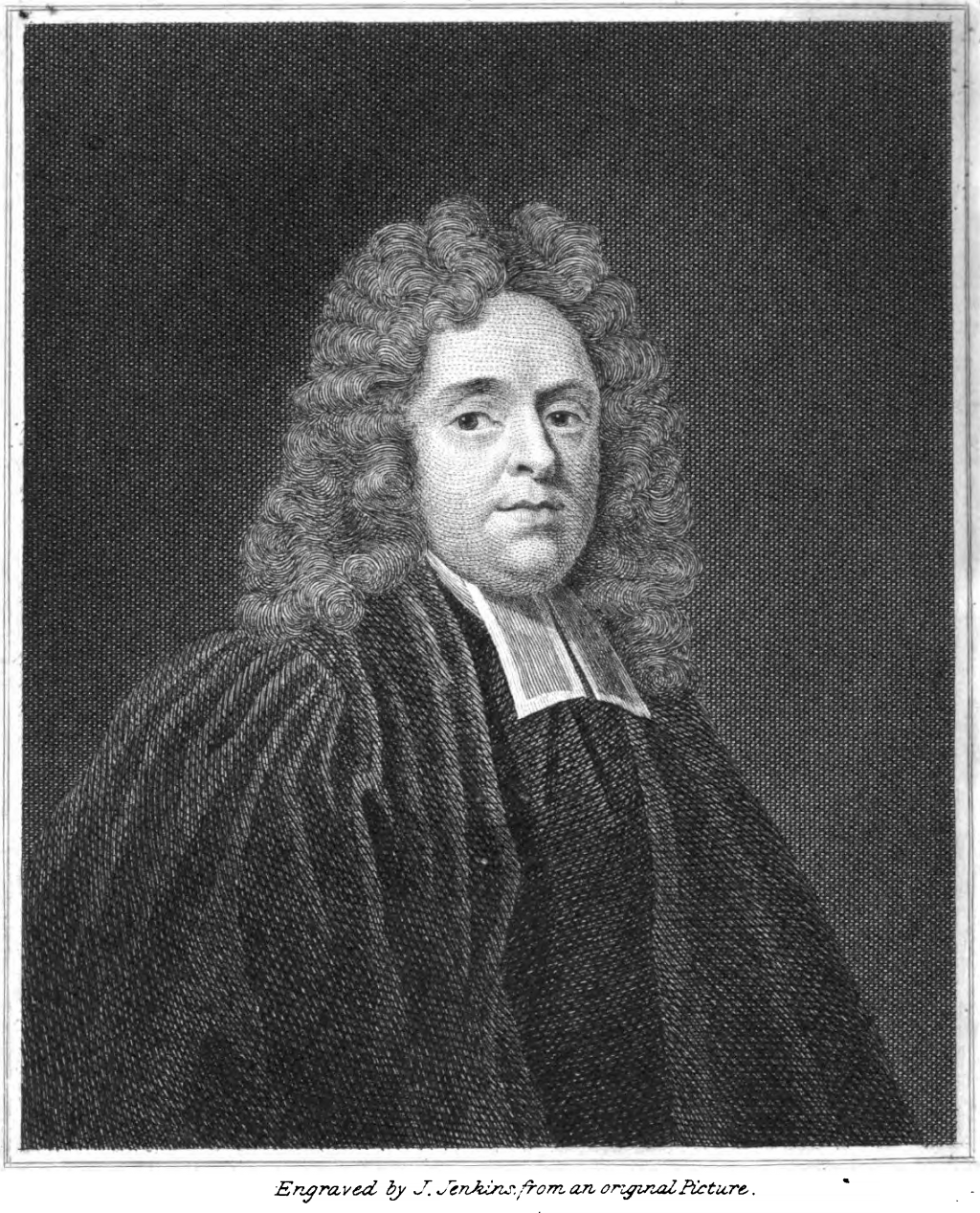
Matthew Henry was born in Flintshire on 18th October 1662. The year 1662 is an important year in the history of Christianity in England and Wales. It was the year that the Act of Uniformity was enacted, which saw over 2,000 Anglican clergymen ejected from their pulpits. The Act meant that those who sought to hold public office in government and church had to adhere to the standards and statements set out in the 1662 Book of Common Prayer. As a direct consequence of this legislation, more than 2,000 clergymen declined to swear the oath and were removed from the Church of England in an event referred to as the Great Ejection. While there had previously been ministers who were not part of the established church, this event established the idea of non-conformity, leading to a significant portion of English society being barred from public life for a century and a half. A few sections of this Act were still in force in the United Kingdom at the end of 2010. Matthew Henry’s father, Philip Henry, was one the many men ejected from the Church of England in 1662.
After the ejection, Philip Henry and his wife moved to the family estate, Broad Oak, a farmhouse on the borders of Flintshire and Shropshire. It was here at Broad Oak at about three in morning that Matthew Henry was born. Matthew was often sick during his early year, but each time he recovered by God’s grace. It is believed that he was able to read the Holy Scriptures as early as 3 years old. He was educated at Grey’s Inn, London.
In 1686, Matthew Henry was invited by a local Nonconformist minister to establish an assembly in Chester, England. He was initially hesitant to accept the post, but on May 9th, 1687 he was ordained by a group of six nonconformist minsters and established a new congregation in the City of Chester. The congregation grew under his ministry and in 1699 a new meeting place for the congregation was built. While in Chester, Matthew Henry founded the Presbyterian Chapel on Trinity Street.
Matthew Henry married Katherine Hardware on July 19th, 1687, the same year he was ordained. Sadly, shortly after the birth of their first and only child, Katherine died of smallpox in February 1689, she was just 25 years old. Their child was called Kathrine after her mother. Sadly, the child died 15 months later. Matthew Henry remained on good terms with the Hardware family. He was introduced to Mary Warburton, a relative of Mrs. Hardware. Henry married Mary Warburton on July 8th, 1690 in Chester. Matthew and Mary had two children who died young. His second child, Elizabeth born on April 2nd, 1691 died in infancy and his third child born in 1693, died just three weeks old. Matthew Henry kept a daily dairy and there is no hint of complaint to God for all the distress he endured. Rather he used these times of deep personal pain to humble himself before God. He did have children that reached adulthood.
He moved to Hackney, London in 1712 after accepting an offer to become the minister of a congregation. At this stage in his life the Exposition of the Old and New Testament was nearing the publication stage. The following year, 1713 he moved back to Chester and his health started to decline. On June 21st, 1714 Henry was traveling to London and on route he was thrown from his horse. He could no longer travel at stopped at Queen’s Aid House in Nantwich. The following day, June 22nd 1714, he went to be with God.
The life of Matthew Henry was one of a godly man. He was a man that practiced what he preached. His life was centred around the Gospel and ministry to the glory of God. One of the best known quotes from his commentary, and a personal favourite of mine, is found in Genesis regarding the relationship between men and women, from the story about Adam and Eve.
Matthew Henry wrote, “The woman was made of a rib out of the side of Adam; not made out of his head to rule over him, nor out of his feet to be trampled upon by him, but out of his side to be equal with him, under his arm to be protected, and near his heart to be beloved.”
Although I have spent much of my time talking about Matthew Henry in positive terms, I feel it is only right to point out that he did not always believe the right things and there are parts of his commentary that I would disagree with, for example his teachings on end times prophecy. So, his commentary does need to be read with caution. However, despite that his writings are well worth reading and have much to teach us.
“Moreover, brethren, I declare unto you the gospel which I preached unto you, which also ye have received, and wherein ye stand; By which also ye are saved, if ye keep in memory what I preached unto you, unless ye have believed in vain. For I delivered unto you first of all that which I also received, how that Christ died for our sins according to the scriptures; And that he was buried, and that he rose again the third day according to the scriptures:”
1 Cor. 15:1-4
Listen to some extracts from Matthew Henry’s commentary on the passage of Holy Scripture.
“The doctrine of Christ’s death and resurrection, is the foundation of Christianity. Remove this, and all our hopes for eternity sink at once. And it is by holding this truth firm, that Christians stand in the day of trial, and are kept faithful to God. We believe in vain, unless we keep in the faith of the gospel.”
“When sinners are, by Divine grace, turned into saints, God causes the remembrance of former sins to make them humble, diligent, and faithful.”
“All true Christians believe that Jesus Christ, and him crucified, and then risen from the dead, is the sun and substance of Christianity.”
If you want your life to count for something then surrender it to the Lord Jesus Christ. If you want your life to be used by God, then surrender it to the Lord Jesus Christ. If you want to have a happy and full life then come to the Lord Jesus Christ and embrace Him as your Lord and Saviour. The hope of the Gospel is that sin can be forgiven, hearts can be changed, minds can be transformed and souls can be saved. This is the message and life that Matthew Henry lived. His life is a testimony to the grace, mercy and love of God. He had many personal battles and sufferings during his 51 years of earthly life, but he looked to God each time for wisdom and guidance. He wrote, “The pardoning mercy of God in Christ, is the only source of a sinner’s happiness.” And it is this that I encourage you to do today. To put your faith in the pardoning mercy of God that is given to us in the shed blood of Christ on the cross.
Matthew Henry Quiz
- In which year was Matthew Henry born?
- How many volumes are in his well known Bible commentary set?
- What act of parliament was past in the same year of his birth?
- In which year did Matthew Henry die?
- What was the name of Matthew Henry’s first wife?





Leave a comment