
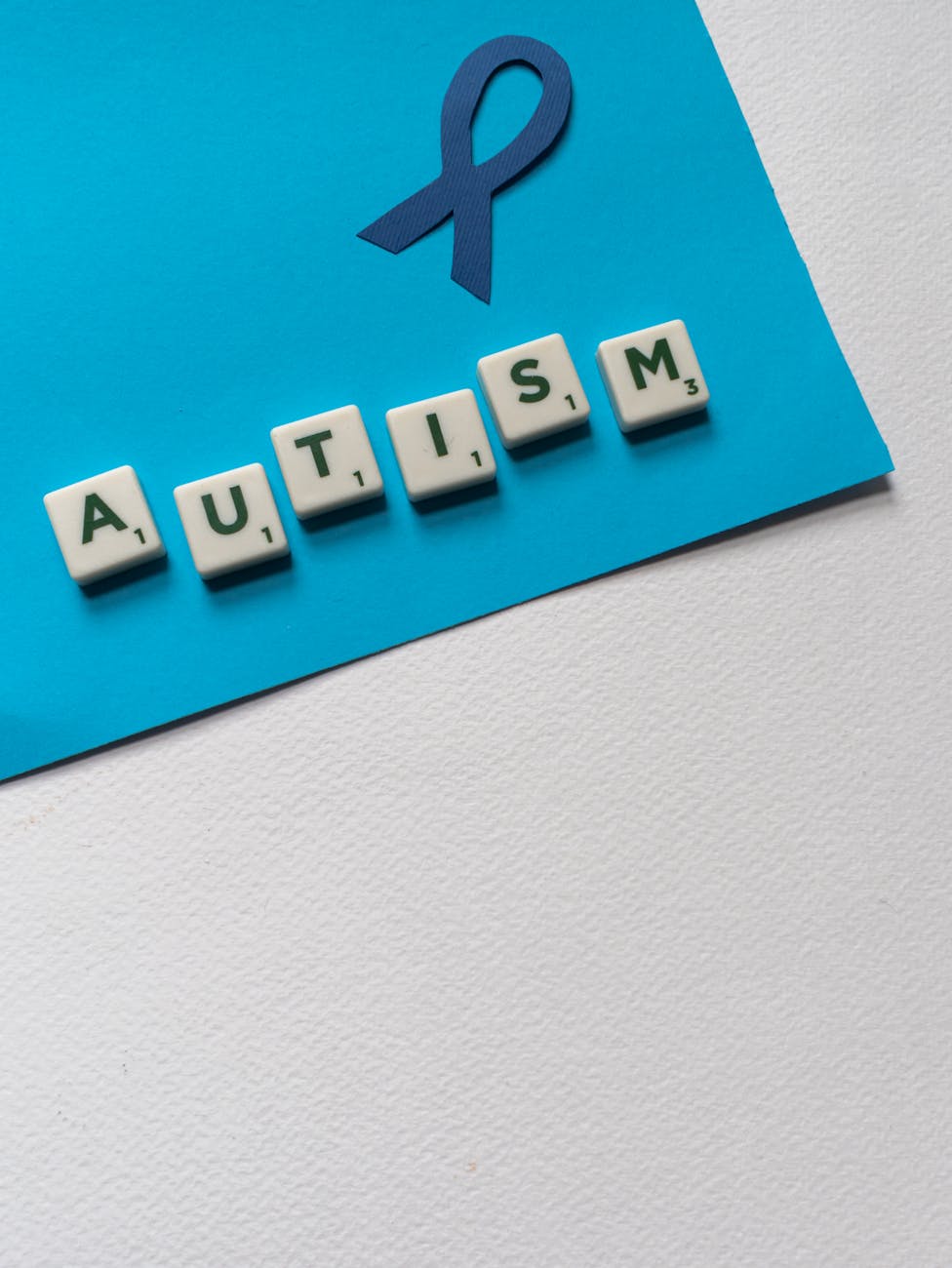
What is Autism? Autism is a life-long disability that affects a person’s ability to communicate and relate to the world around them. Some people with Autism have learning disabilities, and some have normal or even very high intelligence. No two Autistic people are the same. This is what makes Autism a very wide-ranging and an interesting condition. The type of Autism I have is called Asperger’s Syndrome. One major difference between Asperger’s and Non-Asperger’s is that there is no speech delay in Asperger’s.
For as long as I can recall I knew I was not like other children my age. I remember as they played with toys, I was more interested in discovering how the toy worked. I would spend hours trying to work out why the wheels on a toy car go around. I would be fixed on this one topic until I worked it out. Apart from being a very inquisitive child and very sensitive to bright lights and loud noises I developed normally in most areas. I had a relatively happy childhood. I went to a mainstream school, and I enjoyed my school years. Although I did not excel academically, due to the fact that I could not see the point in learning what I was expected to, school for me was a time I look back on with warmness and a little regret. I say regret because I now wish I applied myself a little better than I did. I believe my education suffered due to my autism going undetected throughout my schooling. I was not officially diagnosed until I was 18 years old.
Growing up with autism was difficult and at times a battle. I believe this to be the case because I would become upset at what most people would consider minor things. Things outside of my control upset me the most. For example, if I was meeting a friend and the friend was late, even by a few minutes, this would cause fear and an unsettling feeling to begin in the centre of my body. I would try to understand why? Maybe they forgot, maybe they have been involved in a serious accident? My thoughts would range from reasonable to the unreasonable. On some occasions, I would break out in a cold sweat and worry about the situation, as most people would wait a few more minutes before trying to call their friend I would just ponder all sorts of possible reasons in my mind.
This brings me to the subject of how I think. As a child, I was not interested in what the teachers were teaching me, not because I thought I was above that, but I just found the content of my schooling dull. This is the case in many people with autism, if the subject in question is not interesting many will just switch off and go into their world. Now as an adult I am a very academic person, some might say relentless. I read, write, and study most of my waking hours. I find more pleasure in reading and looking things up more than socialising with friends or watching TV. I would like to learn more about the workings of the autistic mind as I find I can learn faster, remember more, and focus far longer than non-autistic people. When reading a book for example I can remember vast sections of the material, even years after I have read the book. I also find that my attention span is above average. Often my mother would inform me that I have been doing something for several hours, and now would be a good time to stop.
Most people with Autism will find a passion for one subject and devote their whole life to that subject. Therefore, most people with autism will be very knowledgeable about the subject. As for me I have an interest in history, art, classical music, and theology among others. I would say that I have a good general knowledge of these topics, but excel in theological studies, writing and remembering the worlds national flags and the history behind them. Writing does not always come naturally to me; it depends on my mindset and how I am feeling on that day. One of my stumbling blocks in writing is explaining things. This is true with many autistic people. We have a hard time in explaining what we mean and why things are so. If you were to ask some of the world’s most well-known autistic people that are known for great discoveries how they came up with such a thought the most likely answer they would give would be something to the effect of, “I just worked it out” or “I just imagined myself in the moment.”
Most of my good ideas don’t come to me when I am sitting at my desk waiting for something to happen. Rather, my best thoughts come to me when I am doing everyday things, such as going shopping or just taking an afternoon walk. The most frequent time is in the evenings. When I am trying to sleep a line for a poem will pop in my head, or an idea for an article. They will come to me in a split second and develop over a period. Hence why I always have a notebook with me and some writing tool. Also, I currently work nights in the medical field, so on my days off I am awake when most people are sleeping.
I would now like to dedicate a few lines to talk about social situations and encounters. I am a loner, not lonely. I enjoy my own company and keep social situations at certain times in the week. This part of my autism journey has changed from when I was a child. I remember when my younger brother was born, I was very protective of him. I would not like people viewing him as a baby and would often try to stop them from coming near him whether we knew the person or not. This protective nature of my family is still very important to me, but not as much as when I was a child.
Social situations for me as a child was my worst nightmare. I hated having to deal with people, be it school or the wider public. After school each day I would go to my room and watch TV, read books, or play games until it was time to go to bed. I would very rarely do what most teenagers do, such as meet with their friends and try to spend as much time away from mum and dad as possible. This suited me very well as I kept to a routine, which is very important to autistic people, and I avoided crowds of people that made me feel very uncomfortable. To this day I am not a fan of large crowds and avoid large towns and cities when alone. I also find it hard to make eye contact and read facial expressions and understand how another person may be thinking or feeling.
This paragraph is the one I dreaded writing the most. My attitude to the world and my behaviour. I see the world in a very black and white way. There are occasions when I can understand that there are some grey areas but most of the time I commit myself to one thing or the other. As a child, I did display episodes of meltdowns and rage as a way of coping with changes and responding to things outside of my control. As I grew these got less frequent, but the ugly meltdowns would still happen on occasions.
I also have an INTJ personality type. Which stands for Introversion, Intuition, Thinking, Judgment. This personality type is the rarest, making up just 0.8% of the population. Some of the characteristics of INTJ’s are value for knowledge and competence, a focus on generating ideas and spending a lot of time inside their minds. Some well-known people with this personality type are Jane Austen, Karl Marx, Isaac Newton, and Albert Einstein.
Throughout my teenage years, I struggled with anxiety and depression. There are traits of being autistic that I don’t like. These among other reasons were the root of my depression. On many occasions I self-harmed and was admitted to the hospital for minor treatment. A few years ago I did enter a very dark period of depression and decided to take what I call “the coward’s way out.” Thankfully by the grace of God my selfish attempt to end my earthly existence failed, but the course I took could well have ended my life. With the help and love of family and dear friends, my depression and anxiety are now under control. I am eternally grateful for the people that God has placed in my life and the gift of the medical professionals that are a great blessing and inspiration to me. By the grace of God I have not had a episode of depression for many years.
You may be wondering why I have called this article, The Blessing and Curse of Autism. In many ways’ autism is a gift. I am thankful for my passion for learning and my ability to write material that others find helpful. I believe that having autism is one of many reasons why I can do what I do. On the other hand, autism gets in the way of daily tasks. Autism can cause embarrassment and I can feel like I am in a war zone. However, having said all this I would not want to change a single thing about my autism because this is what makes me unique and what makes me who I am.





Leave a comment